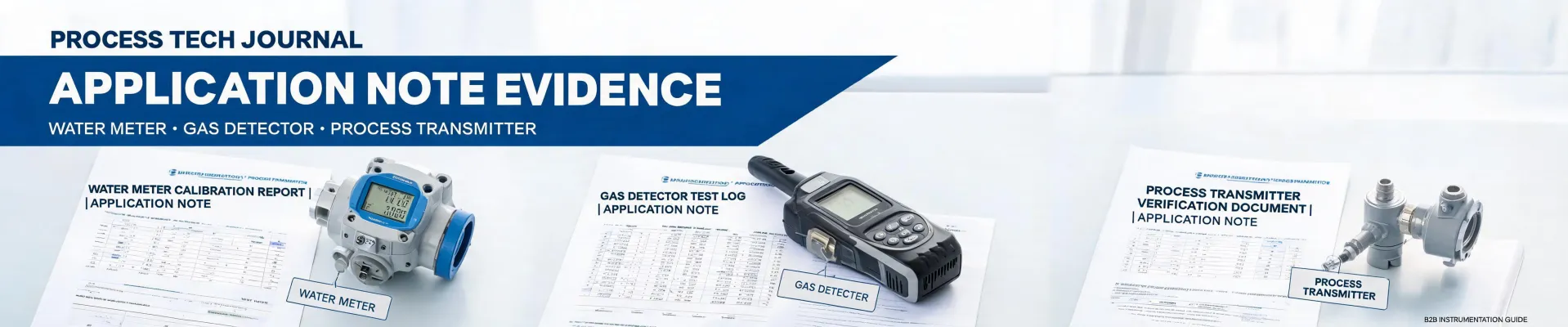
Itron Smart Water Meters vs. Manual Reading: A Buyer's Honest Comparison
2026-08-14 by Marcus Feld
Why I'm Writing This Comparison
I'm the office administrator for a 120-person municipal utility district. I handle all the metering and testing equipment purchasing—roughly $1.2 million a year across about 15 vendors. I report to both operations and finance, so I have to justify every purchase twice: once for the field crew and once for the budget.
When I started ordering meters in 2020, everyone kept telling me Itron was the obvious choice. The assumption was that an Itron smart water meter is automatically better than our old manual-read meters. That assumption bugged me. So I spent the last three years collecting quotes, deployment feedback, and maintenance data. This isn't a sales page. It's a real comparison between two operating models, written from the purchasing chair.
Here's the framework I use with every vendor: total cost, data reliability, deployment friction, and long-term support. If a meter doesn't hold up on those four dimensions, I don't care what name is on the box.
Total Cost: The Meter Is Not the Expensive Part
People think smart meters are expensive because they're high-tech. Actually, the meter itself is a small part of the project. The communication module, cellular backhaul, billing integration, and network server are where the budget goes. The Itron water meter catalogue (itron.com, accessed January 2025) lists a lot of configurations, but it doesn't show the integration invoice.
I don't have hard data on how every utility budgets this. What I can say anecdotally is that our 2023 project cost split was roughly 35% meters, 40% communication and integration, and 25% installation. A traditional register meter was cheaper upfront, no argument. But when I added reading labor, missed reads, and estimated bills, the smart meter paid for itself by year three.
The difference showed up in a specific order. We had to replace 400 meters in a rural zone. Our local distributor quoted a traditional replacement at $55 per meter. Itron's smart water meter quote came in around $135 per endpoint. That gap is real. But the finished project included backflow and tamper alarms, so the operations manager stopped asking us to send a truck for every anomaly. When I say the meter isn't the expensive part, I do not mean it's cheap. I mean the operational cost it saves is where the real return comes from.
Data Reliability: What You Actually Get
Let's compare the data streams directly.
A manual-read meter gives you a monthly number, if the reader can reach the pit. An Itron smart water meter sends hourly consumption, leak signatures, and tamper alerts to the meter data management system. Why does that matter? Because water loss doesn't always show up in a monthly total. Between 2019 and 2021, one of our districts had leaks that appeared for a few hours every night. Four manual reads caught nothing. The Itron smart water meters we installed in 2022 flagged the pattern in two days.
I won't claim 100% accuracy—nothing in field measurement is perfect. But we noticed a real drop in billing disputes because customers could see their own hourly usage. The 'we've always paid the same amount' complaint disappeared.
On the inspection side, the FLIR MR160 imaging moisture meter and the FLIR TG298 thermal imaging camera have become useful sidekicks. The MR160 isn't a water meter. It's a handheld moisture meter that tells you where a wall or pipe chase is actually wet before you open it up. The TG298 thermal camera does the same kind of thing for electrical connections and mechanical rooms. We use both during meter installs to catch wiring issues and water intrusion early. Honestly, I wasn't sure we'd get our money's worth from the TG298 when our electrician requested it. Now it's one of the first tools the crew grabs when a site has an intermittent fault.
Deployment: What the Install Crew Won't Tell You
Here's the dimension where I expected Itron to lose. I thought a traditional meter swap would be easier than installing networked equipment. In practice, the reverse was true for us.
Old meters are usually buried in pits or hidden in cramped basements. Each manual replacement involved the same routine: locate, unlock, twist, test, re-lock, move on. Predictable but slow. The smart meter installation required more training and more planning for communication coverage. But it eliminated the recurring monthly visit. If I could do one thing over, I would have checked cellular coverage at the pilot site before ordering the first 400 endpoints. (Note to self: coverage maps lie.)
The question isn't whether smart meters are harder to install. They are. The question is whether you want to spend time once on installation or forever on reading. I'll take the hard week.
Maintenance, Support, and the Balluff Question
Support is where the honest comparison gets messy. A traditional meter supplier has a local counter and spare registers in stock. Itron's support is a little more formal. You need a support contract, and knowing the network administrator's phone number is not optional. That's not a bad thing, but it's a different skill set.
Before I get to the sensor question, a quick word about vetting suppliers. One vendor last year quoted excellent prices on spare sensors but couldn't produce a proper invoice. Finance rejected two bills and we lost a week of internal processing time. The parts were fine; the paperwork wasn't. Now I verify invoicing before I trust a new supplier.
I've never fully understood why some smart meter projects stall. My best guess is the hardware is fine, but the utility didn't plan for the data. The meter can send hourly readings, but if nobody is assigned to look at them, the operational benefit disappears.
Now for the sensor question I get asked the most: is Balluff a good brand for sensors? That's the exact question I asked myself during a recent pump station upgrade. In our experience, Balluff is a solid choice for industrial sensors—proximity switches, pressure sensors, and photoelectric sensors on plant equipment. Their documentation is clear, and their lead times are honest. People assume Balluff is expensive because it's a premium brand. Actually, the price reflects the support and reliability. When a sensor fails on a wastewater pump, the troubleshooting and downtime cost more than any sensor.
But here's the limitation. A Balluff sensor is not a billing-grade water meter. I wouldn't try to build a utility revenue system out of general-purpose sensors. For that job, the meter platform matters more than any single sensor. We use Itron smart water meters for billing and leak detection, and Balluff sensors for local process control. They solve different problems.
When Should You Choose Itron, and When Shouldn't You?
If you have a utility network with communication towers, a data team that can review alerts, and customers who call about high bills, an Itron smart water meter will earn its keep. I'd recommend Itron when you need hourly data, tamper alarms, and remote shutoff—not as a luxury, but as an operational requirement.
If you're a small system with no network coverage, no IT support, and a budget that can't absorb integration costs, a traditional meter is not a shameful choice. It's the right choice. I've told that to two neighboring utilities already. Buy the simple meter, build your case for a network, and revisit it when the business case is real.
If you're in the middle, start with a pilot area. Pick a district with high water loss, install Itron smart water meters there, and compare the leak data with a manual-read district. The leak reduction alone paid for the pilot within one summer. That's how we justified the rollout to our finance director.
And if you're shopping for inspection tools, keep the FLIR MR160 imaging moisture meter and the FLIR TG298 thermal imaging camera on your list. They don't compare to each other—they do different jobs. The MR160 finds hidden moisture; the TG298 finds hot spots. Both are worth the money when your field crew stops guessing.
Pricing referenced here is from our Q4 2024 quotes. Verify current rates at itron.com, flir.com, and balluff.com.

Marcus Feld
Marcus Feld is an electrical test and measurement analyst specializing in multimeters, oscilloscopes, clamp meters, insulation testers, spectrum analyzers, and data loggers. He applies IEC 61010-2-030 and IEC 61010-031 concepts while examining measurement category, bandwidth, true-RMS response, input loading, and stated uncertainty. His work helps maintenance engineers and test teams choose safe instruments with performance suited to the signals and environments they actually measure.
Leave a Reply