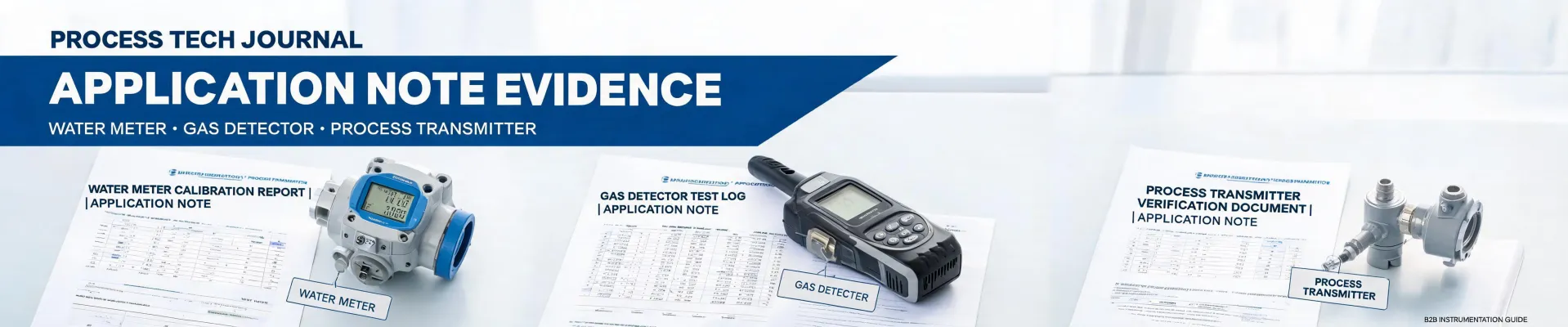
Itron Flow Meter, Itron App, and Precision Tool TCO: A Pitfall Documenter's Checklist
2026-09-16 by Marcus Feld
-
The short answer: buy the project, not the line item
-
Why you can trust this checklist
-
Where the money actually goes: Itron flow meter and Itron app
-
Small tools, big rework: 24 digital caliper and thread micrometer
-
How to use an Extech multimeter without frying your budget
-
What I would do differently
-
When this advice does not apply
The short answer: buy the project, not the line item
If you are comparing an Itron flow meter, an Itron app rollout, a 24 digital caliper, a thread micrometer, or trying to learn how to use an Extech multimeter, the sticker price is the smallest number on the page. The real number is total cost of ownership: hardware, software, installation, calibration, training, downtime, rework, and the cost of bad data.
I learned that the hard way. In 2017, I approved a purchase order for what looked like a cheap set of measurement tools. The invoice was $3,200. After calibration failures, missed tolerances, and one rushed redo, that order cost us $4,900 and a one-week delay. That is when I started tracking TCO instead of unit price.
Look, this is not a theory. It is a checklist. Here is what I now do before I sign off on metering or measurement gear.
Why you can trust this checklist
I have been handling instrumentation and metering orders for utility and industrial accounts for nine years. I have personally made and documented 31 significant mistakes, totaling roughly $47,000 in wasted budget. I am not a vendor. I am the person who has to explain the rework.
In my first year, I made the classic mistake of buying a 24 digital caliper by price alone. It arrived with a calibration certificate that looked fine. Six weeks later, we found out the certificate was not traceable to a recognized standard. We had to recall a batch of fabricated parts. That error cost $890 in redo plus a one-week delay.
After the third rejection in Q1 2024, I created our pre-check list. We have caught 47 potential errors using it in the past 18 months. Not all of them were expensive. But a few would have been.
Where the money actually goes: Itron flow meter and Itron app
An Itron flow meter is not just a pipe fitting with electronics. It is part of a data chain. If the meter is right but the Itron app configuration is wrong, you still get bad numbers. If the app is right but the installation is sloppy, you still get bad numbers. If both are right but nobody owns calibration, you still get bad numbers.
When I compared two pilot projects side by side, same Itron flow meter model, different installation crews, I finally understood why commissioning matters as much as hardware. Crew A followed the torque and grounding spec. Crew B improvised. The hardware cost was identical. The data quality was not. Crew B created three weeks of extra field visits, and we had to rebuild trust with the customer.
For the Itron app, the hidden costs are usually in the workflow. Ask these questions before you buy:
- Who configures user roles and alarms?
- Does the app integrate with your existing billing or SCADA system?
- Who trains the field techs, and how often?
- What happens when a firmware update changes a screen or export?
- Is there a sandbox for testing before you push to production?
Those questions do not show up in a unit price quote. They show up in your labor budget. In my experience, a cheaper meter with a painful app rollout is way more expensive than a slightly higher quote with clean integration. That is TCO thinking.
Small tools, big rework: 24 digital caliper and thread micrometer
The same logic applies to hand tools. A 24 digital caliper and a thread micrometer are cheap compared to a flow meter. That is exactly why people skip the pre-check. Do not.
Here is what I check now:
- Calibration traceability. The certificate should come from an ISO/IEC 17025 accredited lab or an equivalent recognized standard. If the seller cannot explain traceability, walk away. For U.S. utility and industrial metrology work, NIST Handbook 44 is also a useful reference for weighing and measuring devices.
- Resolution vs. accuracy. A caliper that reads 0.001 mm is not necessarily accurate to 0.001 mm. Resolution is the display. Accuracy is the measurement.
- Thread micrometer compatibility. Thread micrometers need the right anvil and spindle for the thread form and pitch. Buying a generic tool often means buying a second tool later.
- Environmental fit. A caliper used near coolant, grit, or temperature swings will drift. The cheap one may pass the first check and fail the hundredth.
- Replacement parts. Batteries, covers, cables, and measuring faces. If parts are hard to get, the tool becomes disposable.
I once ordered 12 thread micrometers with the wrong pitch range. Checked it myself, approved it, processed it. We caught the error when the machinist opened the first box. That mistake affected a $3,200 order. We lost two days and a lot of credibility. Lesson learned: verify the part number against the thread chart, not the catalog photo.
How to use an Extech multimeter without frying your budget
If you are searching for how to use an Extech multimeter, start with safety, not settings. The wrong setting can damage the meter, the circuit, or you. For industrial work, check that the meter has the right safety category for your environment. IEC 61010 CAT ratings matter. If you are measuring on a service panel, a CAT II meter is not the answer.
Here is my field checklist for how to use an Extech multimeter:
- Inspect the leads first. Cracked insulation is a stop-work issue.
- Confirm the function and range before touching a live circuit.
- Use the correct jack. Current measurements often move the red lead.
- Start high and step down when you do not know the expected value.
- Log the reading and the conditions. A number without context is not data.
The TCO angle is training. A $120 multimeter becomes a $1,200 problem if three techs use it wrong and nobody documents the readings. I now budget for a short refresher every year. That is not glamorous. It is cheaper than a blown fuse, a missed fault, or a safety incident.
What I would do differently
It took me three years and about 150 metering and tool orders to understand that the cheapest line item is rarely the cheapest project. I used to compare quotes by unit price. Now I compare them by total cost of ownership.
For an Itron flow meter or Itron app project, I ask for a commissioning plan, a training plan, and a support plan. For a 24 digital caliper or thread micrometer, I ask for calibration traceability and spare parts. For how to use an Extech multimeter, I ask for training records and a lead inspection routine.
That is the whole framework. It is simple. It is not easy.
When this advice does not apply
This worked for us, but we are a mid-size utility contractor with predictable AMI and industrial maintenance work. If you are a one-person shop buying a 24 digital caliper for occasional hobby use, the calculus might be different. A basic calibrated caliper may be enough. If you are only checking continuity around the house, an expensive Extech multimeter with high CAT ratings may be overkill.
I can only speak to domestic operations and standard utility environments. If you are dealing with hazardous locations, custody transfer, or international metrology requirements, there are factors I am not aware of. Check the current Itron documentation and your local utility or metrology authority.
This was accurate as of January 2025. Itron firmware, app versions, calibration standards, and tool pricing change. Verify current specs before you buy. Prices and policies may have moved since I wrote this.
Do not ask, What is the unit price? Ask, What will this cost me after installation, calibration, training, and the first mistake?

Marcus Feld
Marcus Feld is an electrical test and measurement analyst specializing in multimeters, oscilloscopes, clamp meters, insulation testers, spectrum analyzers, and data loggers. He applies IEC 61010-2-030 and IEC 61010-031 concepts while examining measurement category, bandwidth, true-RMS response, input loading, and stated uncertainty. His work helps maintenance engineers and test teams choose safe instruments with performance suited to the signals and environments they actually measure.
Leave a Reply