Application shortlisting
Share medium, pipe size, gas target, installation zone, data output and reporting duty. The team narrows candidate instruments by operating envelope before discussing price or delivery.
Guided services
Itron service conversations are built for engineers and buyers who need a practical path from specification to delivery. The goal is not to rename every request as a custom project. It is to identify the measurement duty, approval region, calibration evidence and installation boundary early enough that the purchasing file can survive technical review. For water and heat metering teams, that means looking at MID or EN 1434 scope, meter sizing, communication handoff and how the reading will be used for billing or network reporting. For environmental and gas monitoring teams, it means separating portable entry checks from fixed boundary monitoring, documenting %LEL or ppm range, and naming the ATEX/IECEx Zone language when hazardous areas are involved.
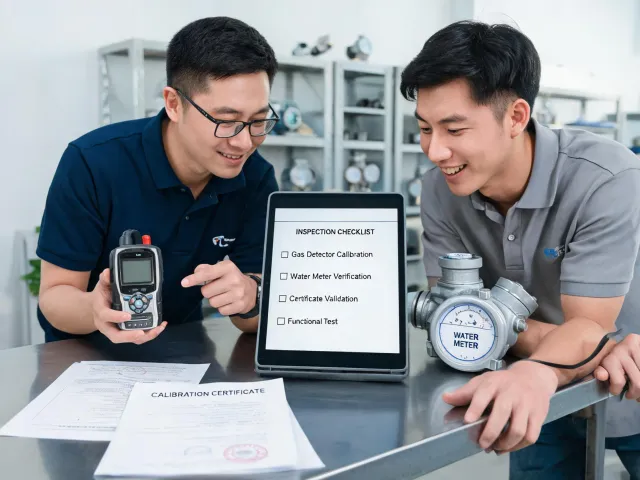
Two-column support model
Share medium, pipe size, gas target, installation zone, data output and reporting duty. The team narrows candidate instruments by operating envelope before discussing price or delivery.
Accuracy statements, reported uncertainty, approval marks and calibration intervals are checked as separate items so procurement can see what is verified and what still requires confirmation.
Device setup notes, reading workflow, alarm assumptions and documentation requirements are summarized for the people who will install and maintain the instruments after purchase.
When the application changes, the service path revisits range, drift expectation, spare availability and regional approvals instead of treating the original specification as permanent.
Frequently checked items
Teams often collect a model name, a few keywords and a desired delivery date. The missing details are usually the source of delay: approval region, output protocol, alarm response, calibration chain and whether the data will be used for billing, safety or compliance reporting.
The RFQ becomes easier to approve because it lists application duty, measurement range, documented accuracy, accessory assumptions and evidence gaps. Procurement sees what can ship, engineering sees what must be verified, and safety teams see where hazardous-area language applies.
Inline service request
Use the form to describe the site, medium, installation conditions, approval region and documentation needs. The first response can then focus on a smaller set of instruments instead of reworking the basics.